

Tooth Extractions – Concord, NH
Ensuring Healthier Smiles for the Future
 At Generations Dental Care, our team of professionals is here to deliver safe and comfortable treatment options to patients experiencing extreme dental decay or facial trauma. When a tooth becomes loose, there are ways we can attempt to save it; however, when it poses a risk to nearby healthy structures, we must consider
tooth extraction in Concord
. Using advanced technologies and techniques, we remain committed to ensuring gentle care and successful results, so
call our office
to schedule an appointment to learn more about how we ensure healthier smiles for the future.
At Generations Dental Care, our team of professionals is here to deliver safe and comfortable treatment options to patients experiencing extreme dental decay or facial trauma. When a tooth becomes loose, there are ways we can attempt to save it; however, when it poses a risk to nearby healthy structures, we must consider
tooth extraction in Concord
. Using advanced technologies and techniques, we remain committed to ensuring gentle care and successful results, so
call our office
to schedule an appointment to learn more about how we ensure healthier smiles for the future.
Why Choose Generations Dental Care for Tooth Extractions?
- Patients Remain in One Location for Treatment
- Highly Skilled and Trained Oral Surgeon for Wisdom Tooth Extractions
- Quality Dental Plan Available for Uninsured Patients
 Reasons Why Tooth Extractions Are Necessary
It is likely never to be the first form of treatment that our team will recommend; however, if we discover that your tooth is putting the rest of your smile at risk, or you are experiencing one of the other following situations, we’ll begin to develop a plan to remove it:
- You’ve sustained severe facial trauma that has caused significant damage to the tooth.
- You have crowded teeth and need orthodontic treatment to realign your smile; however, we must first remove one or more teeth for effective results.
- You have impacted wisdom teeth that need to be removed to avoid damage to nearby healthy teeth.
- Severe decay has spread throughout the tooth and is putting other teeth at risk.
 The Process of Removing a Tooth
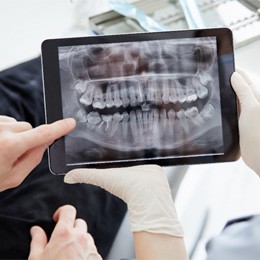
Removing a tooth requires that we first identify which type of tooth needs to be removed. If it is not a wisdom tooth (third molar), our team can take care of the process. However, if you have a wisdom tooth that has partially erupted or is impacted, our oral surgeon will come in to perform the procedure.
There are typically two types of extraction – simple and surgical. A simple extraction involves removing a tooth that is fully erupted. After administering local anesthesia to numb the mouth, we’ll use a dental elevator to lift the tooth before incorporating dental forceps to rock it back and forth until it separates from the gums.
If a tooth is impacted, we’ll need to perform a surgical extraction, which involves opening the gum tissue to access the underlying tooth. Using specialized instruments, we will often separate the tooth into pieces so that it is less likely to bother the surrounding bone.
 Tooth Extraction Aftercare
Once the procedure is complete, our dental team will provide helpful post-op instructions so that you can ensure a swift and successful recovery. Some of the most important tips to remember include:
- Take any prescribed medications or over-the-counter pain relievers as instructed.
- Make sure to rest after returning home from your dental appointment, as it will take time for the anesthesia to wear off.
- Avoid any strenuous activity following your procedure, as this will only cause you to bleed more.
- Rest with your head elevated to keep the blood from rushing to this area of the body and causing additional pressure and discomfort.
- Avoid any hard, crunchy, or sticky foods for several days so that your gums have a chance to heal.
- Consume water to stay hydrated and flush out bad bacteria from inside your mouth, but do not use a straw, as this can dislodge one of your blood clots.
- Brush and floss your teeth after 24 hours but be careful when nearing your surgical wounds.
- Rinse with a warm saltwater mixture but do not spit or swish.
- Do not smoke or use tobacco while healing from your surgery.
Tooth Extractions FAQs
Does Getting a Tooth Extracted Hurt?
“Will it hurt?” is one of the most asked questions about tooth extractions. Since the idea of removing a tooth sounds painful, it’s not surprising to see why either! Fortunately, you won’t feel anything more than some slight pressure from our Concord team working because we will thoroughly numb your mouth first. We’ll also share how you can keep soreness and discomfort at bay once you return home and the numbing agent wears off, like taking OTC pain medication (as directed on the label) and using a cold compress for 10 minutes at a time.
Can I Leave the Space Empty After a Tooth Extraction?
Our patients are often curious if they have to replace their tooth, especially if the new gap between their teeth doesn’t show when they smile. The short answer is “That depends.” If the tooth was removed due to overcrowding, then putting a dental bridge or implant in its place defeats the purpose. If, on the other hand, the tooth was extracted due to considerable decay or some other form of damage, then it needs to be replaced. Otherwise, there’s a risk of other problems, like dental drift.
What’s the Recovery for Tooth Extractions Like?
At the end of your appointment, we will provide you with verbal and written instructions so you know how to navigate the next few days as smoothly and painlessly as possible. That includes not using a straw, sticking to soft foods, taking OTC pain medication as directed, changing the gauze as needed, and keeping your head elevated while you sleep. Around the 3-day mark, you should feel much better.
Note: If your symptoms seem to be getting worse, you have a fever, or there are any other warning signs of an infection present, call us ASAP.
How Should I Prepare for My Tooth Extraction?
The weekend before your tooth extraction, it’s a good idea to dedicate some time to stocking up on what you need. That includes soft foods, OTC pain medication, and cold compresses. You should also arrange for a trusted adult to drive you to and from your appointment, especially if oral conscious sedation or IV sedation is a part of your treatment plan. Finally, check in with your dental team to see if there is anything else they recommend, like sticking to water the morning of the procedure.
What’s the Difference Between Tooth Extractions and Wisdom Tooth Surgery?
Wisdom tooth surgery refers to the removal of the third set of molars. Tooth extractions, on the other hand, involve removing any tooth that is decayed, damaged, or causing overcrowding. In other words, wisdom tooth surgery does fall under the “tooth extraction” umbrella, but the two terms cannot be used interchangeably.
Can I Smoke After Getting a Tooth Extracted?
Cigars, cigarettes, e-cigarettes, and other tobacco products have the potential to delay healing, which is why it’s so important that you refrain from using them following your tooth extraction. In fact, patients are encouraged to quit for a minimum of five days (although quitting entirely is more ideal).